
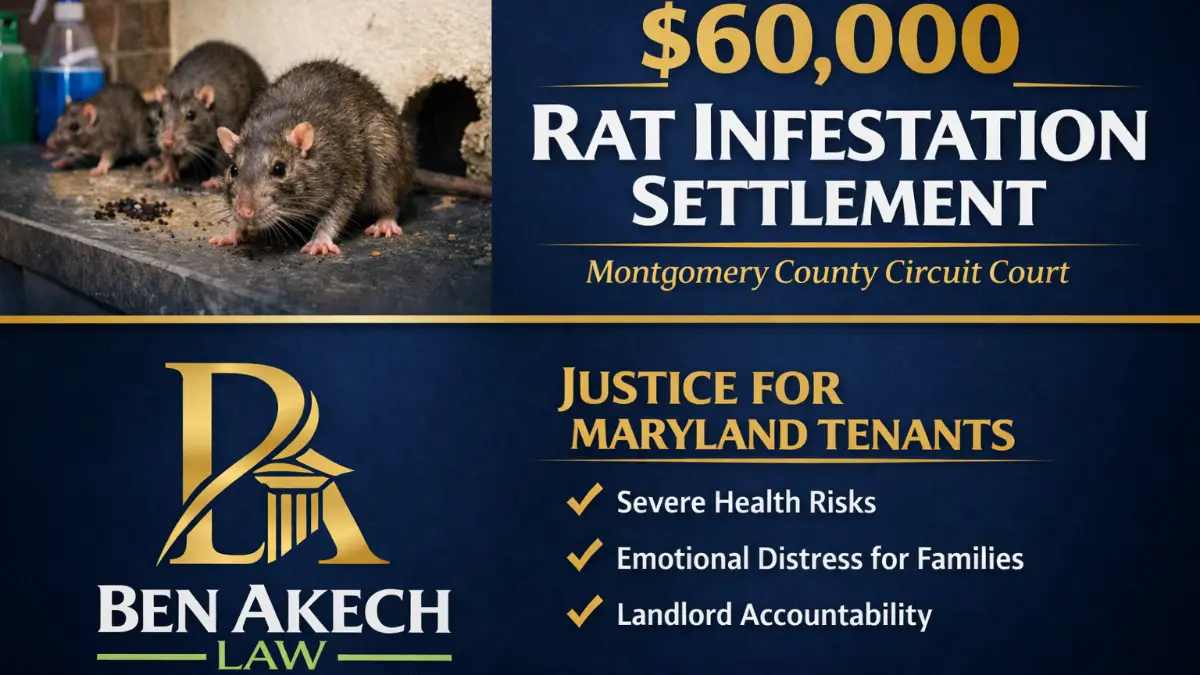
Tenants in Maryland have a right to safe and habitable housing—but what happens when a rental turns into a health hazard? In a recent case in Montgomery County, a family secured a $60,000 settlement after enduring a severe rat infestation that forced them to live in fear inside their own home.
This case is a powerful example of how tenants can hold landlords accountable—and in some situations, even break a lease without penalty.
From Midwest Move to Maryland Nightmare
A husband and wife relocated from the Midwest to Maryland after the husband accepted a new job opportunity. What should have been an exciting new chapter quickly turned into a distressing experience. Within days of moving in, the family discovered:
- Rats running through living areas
- Droppings in the kitchen and bathrooms
- Scratching sounds inside walls at night
The infestation was not minor—it was severe, persistent, and dangerous.
Children Too Afraid to Use the Bathroom
The emotional toll on the family—especially the children—was profound.
- The children were terrified to be alone in any room
- They were even afraid to use the bathroom without supervision
- The family suffered from anxiety, sleep disruption, and constant stress
These conditions go beyond inconvenience. Under Maryland law, they may constitute a loss of quiet enjoyment and support claims for emotional distress damages.
Legal Violations: Breach of Habitability in Maryland
Maryland landlords are legally required to maintain rental properties in a condition that is:
- Safe
- Sanitary
- Fit for human habitation
A serious rat infestation is a direct violation of the implied warranty of habitability.
In this case, the landlord’s failure to properly address the infestation exposed them to liability for:
- Breach of habitability
- Negligence
- Constructive eviction
- Housing code violations
The case proceeded in the Montgomery County Circuit Court, where the tenants’ evidence demonstrated the severity and duration of the problem.
Can You Break a Lease for Rat Infestation in Maryland?
Yes—under certain conditions, tenants may be able to break a lease early without penalty due to a rat infestation.
When a landlord fails to correct serious conditions that make a property unsafe or unlivable, tenants may claim constructive eviction. This means the landlord’s inaction effectively forces the tenant to move out.
To protect your rights, tenants should:
- Provide written notice to the landlord
- Allow a reasonable opportunity to repair
- Document the infestation (photos, videos, reports)
- Vacate only if the issue remains unresolved
When done properly, tenants may avoid liability for future rent and even pursue damages.
$60,000 Settlement: Holding the Landlord Accountable
After litigation and mounting pressure, the case resulted in a $60,000 settlement for the tenants.
This outcome reflects:
- The severity of the rat infestation
- The landlord’s failure to act
- The emotional harm suffered by the family
- The disruption to daily life and safety
This type of result reinforces that Maryland courts take tenant safety seriously.
How Ben Akech Builds Strong Tenant Cases
Attorney Ben Akech has extensive experience representing Maryland tenants facing unsafe living conditions, including rat infestations, mold exposure, and structural defects.
His approach includes:
Strategic Evidence Development
Using photos, inspection reports, and maintenance records to establish liability.
Emotional Distress Documentation
Highlighting the real-life impact on families—especially children—to strengthen damages claims.
Aggressive Litigation Strategy
Applying pressure through Circuit Court litigation to maximize settlement value.
Focused Tenant Advocacy
Ensuring clients recover compensation for both financial loss and emotional harm.
What Maryland Tenants Should Do Right Now
If you are dealing with a rat infestation in your rental property:
- Take photos and videos immediately
- Notify your landlord in writing
- Keep copies of all communications
- Contact local housing authorities
- Speak with a qualified landlord-tenant attorney
Acting quickly can make the difference between a dismissed complaint and a successful settlement.
Final Thoughts: You Don’t Have to Live Like This
No tenant should be forced to live in a home overrun by rats. This $60,000 settlement shows that when landlords fail to meet their obligations, tenants have powerful legal remedies—including the ability to terminate a lease without penalty and recover damages.
If you are facing unsafe living conditions in Maryland, legal help is available—and taking action can protect both your home and your family.


