
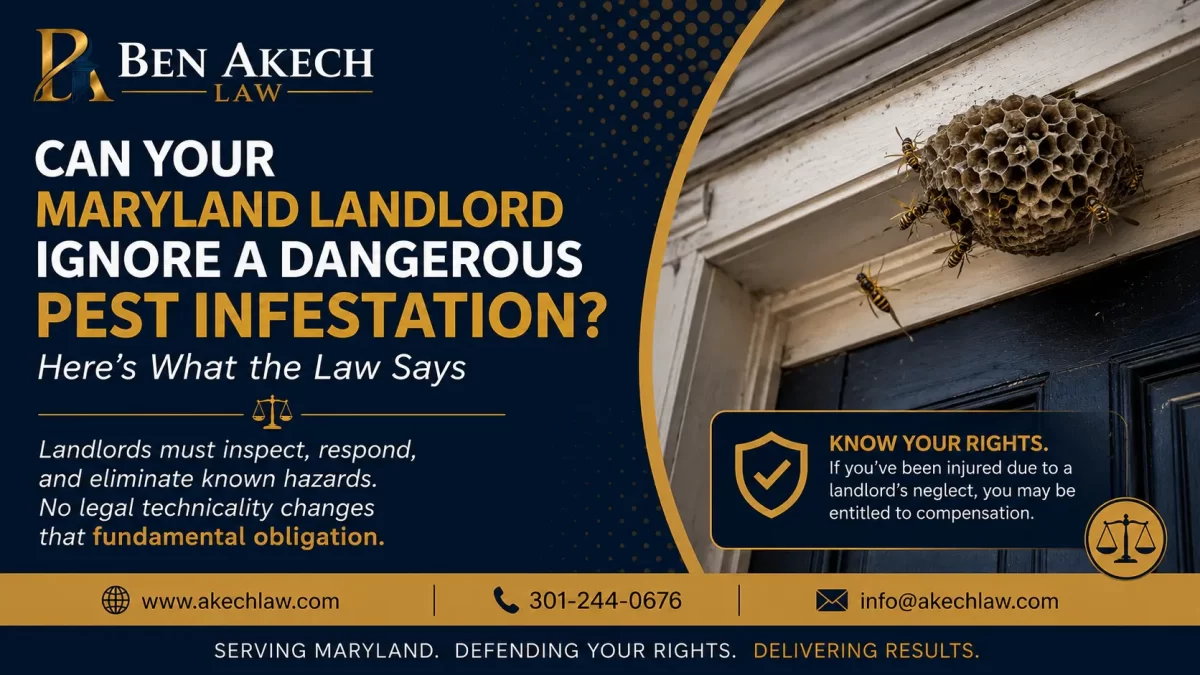
Imagine discovering a massive, dangerous wasp nest near the entrance of your apartment complex. You notify management right away, but they ignore your warning. Days later, you get severely stung and injured on the property.
When you seek accountability for your medical bills, the landlord’s lawyers respond with a bizarre excuse:
“We aren’t responsible because wasps are wild animals, and nobody owns wild creatures!”
While this sounds like a cheap excuse, property managers and insurance companies actually use this argument in court to try to get personal injury lawsuits thrown out.
Is a dangerous insect nest really considered an unpreventable “act of nature,” or is your landlord neglecting their basic duty to keep you safe? Here is how premises liability law really works.
1. Stinging Insects Are Hazardous Pests, Not Wildlife
When landlords try to label a wasp or hornet nest as “wildlife,” they are trying to play a clever word game.
In the eyes of state housing regulations and health codes, stinging insects living on a residential building aren’t wild game or untamed beasts. They are legally classified as pests.
Housing codes require landlords to maintain safe, livable conditions for anyone lawfully on the property. That responsibility includes hiring exterminators to clear out hazardous pest infestations. Calling a yellow jacket nest “wildlife” is just a tactic to dodge basic property maintenance.
2. Notice + Control = Landlord Responsibility
A landlord doesn’t need to “own” an insect to be held responsible for the harm it causes. Instead, courts look at two straightforward questions:
-
Notice: Did management know (or should they have reasonably known) about the dangerous nest?
-
Control: Did management have the authority and power to hire an exterminator and fix the problem?
If you report a nest in a common area—like a hallway, balcony, or entryway—and the landlord takes no action, they have breached their duty of care. A property manager cannot simply ignore a reported hazard and pretend the danger doesn’t exist.
3. Why Defense Excuses Fall Apart in Court
To get a judge to dismiss a lawsuit early, defense lawyers often cite outdated or unrelated court cases. However, these comparisons usually crumble under basic common sense:
-
The “Wild Woods” Comparison: Defense lawyers might bring up cases where someone got stung while trespassing in the woods or climbing a commercial billboard. But an outdoor billboard in an open field isn’t a residential apartment building where people pay rent to live.
-
The “Neighbor’s Tree” Comparison: They might cite cases where wild bees flew over from a neighbor’s yard. However, neighboring property owners don’t owe each other the same legal duties that landlords owe to their tenants.
4. Courts Value Fairness Over Technical Traps
If a property manager tries to dismiss a case early on technical grounds, the legal system provides a safety net.
Judges want cases to be decided on real evidence and fairness rather than procedural tricks. If a tenant’s initial legal paperwork lacks minor details—like the exact minute a notice was sent—courts routinely allow the paperwork to be updated and amended. This ensures the case moves forward so the landlord can be held accountable for neglecting tenant safety.
The Bottom Line
A known, active insect nest attached to a rental building isn’t an unpredictable act of God—it’s a fixable pest problem. Landlords have a basic duty to inspect their property, listen to safety warnings, and eliminate hazards. No legal trickery can erase that fundamental responsibility.
Contact our legal team today via Ben Akech Law to safeguard tenant right.


